Parkwalk Advisors
Not financial or fundraising advice. See full disclaimer.
Tickets
Rounds
Sectors
Target Geography
Last Edited:
October 2, 2025
To suggest a correction to the database, or request to be added or removed from it, contact us at info@adeline.co.uk.
When Moray Wright and Alastair Kilgour launched Parkwalk Advisors in the aftermath of the 2009 financial crisis, few imagined that deeptech spinouts from British universities would soon become one of venture capital’s hottest categories. Yet today, Parkwalk, based in London and backed by IP Group, is the UK’s largest investor in university spinouts, managing over £500 million in capital and having funded nearly 200 startups.
Parkwalk’s distinct approach revolves around one simple conviction: Britain’s research labs are teeming with hidden commercial gems—if you know where to look. The firm invests exclusively in startups emerging from UK universities, typically companies rooted deeply in patented intellectual property and tackling major global challenges. Its sector-agnostic approach has drawn it into fields ranging from quantum computing to autonomous vehicles, AI, and biotechnology. This specificity has led to high-profile successes, including VocalIQ, an AI spinout acquired by Apple; Horizon Discovery, which had a lucrative IPO; and Cambridge CMOS Sensors, snapped up by semiconductor giant ams AG.
Founders approaching Parkwalk should know it is not your typical seed investor. Deals usually start at around £1 million but can reach upwards of £10 million across multiple rounds, reflecting a willingness to commit to startups through their complex early years. A Parkwalk-backed company often finds itself not just funded but networked, with the firm frequently introducing portfolio companies to other investors, corporate partners, and potential executive hires.
Uniquely structured as a series of tax-efficient EIS funds, Parkwalk offers founders patient capital, underpinned by a wide investor base incentivized by government tax breaks. While this EIS structure means companies must tick specific boxes, for those who meet the criteria Parkwalk typically moves swiftly, usually responding within a week of a pitch.
Their model, pairing patient capital with active engagement, is often praised by founders who have partnered with them. Michalis Papadakis, CEO of Oxford AI healthcare startup Brainomix, recently noted Parkwalk’s “continued support” as instrumental across multiple funding rounds. Parkwalk’s strength lies not in flashy promises but in understanding that deeptech innovation needs time, something venture capital’s short-term bias doesn’t always accommodate.
For early-stage founders spinning their dreams out of academic labs into the messy commercial world, Parkwalk represents more than a funding source—it’s a seasoned partner that understands precisely where academia meets the market. In a climate where universities are urged to commercialise and Britain’s economy seeks the next transformative innovation, Parkwalk’s steady, informed approach may prove more essential than ever.

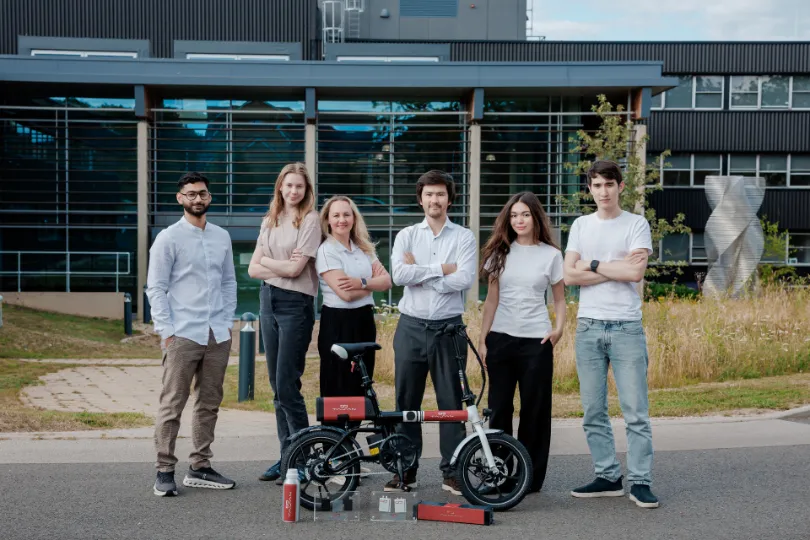
The next generation of sodium batteries: why we invested in TaiSan
Adeline Arts and Science participated in TaiSan's £4.65M seed round, co-led by Eos Advisory and the Midlands Engine Investment Fund II through Mercia Ventures.

Why rest is still today's most radical productivity hack
If being bored is the key to greatness, are you out of practice? Adeline's Liz Bennett on the power of deliberate rest in an era of AI hustle culture.
.svg)