Techstars London
Not financial or fundraising advice. See full disclaimer.
Tickets
Rounds
Sectors
Target Geography
Last Edited:
October 2, 2025
To suggest a correction to the database, or request to be added or removed from it, contact us at info@adeline.co.uk.
Since launching in 2013, Techstars London has become one of Europe’s most influential accelerator programmes, quietly reshaping the UK’s early-stage investment landscape. Originally brought to life as Techstars’ first venture outside the US, through a merger with UK accelerator Springboard, it’s now embedded deeply within London’s vibrant startup scene.
The programme’s strength lies not just in funding—although each chosen startup receives up to $220,000—but in an intensive three-month immersion into a global network of mentors, alumni, and investors. Managing Director Georgie Smithwick, alongside a tight-knit team of experienced entrepreneurs and operators, steers around a dozen carefully selected startups each cohort, distilling thousands of applicants down to a handful of promising ventures.
Techstars London prides itself on being industry-agnostic but exactingly selective, prioritising outstanding founders above all else. Indeed, their explicit selection philosophy is famously simple: team first, idea second. For founders hoping to join, the message is clear: come prepared to show your passion, resilience, and domain expertise rather than just a shiny pitch deck. Techstars alumni range widely—from fintech and consumer startups to social-impact ventures—underscoring the programme’s openness to diverse ideas and models.
Notable alumni include the billion-dollar chat API platform Sendbird; Beam, a widely praised social enterprise tackling homelessness through crowdfunding; and PlayCanvas, a gaming startup later acquired by Snap. Yet it’s not all big-ticket deals and exits—Techstars’ quiet, consistent value lies equally in the personalised, mentor-driven experience founders receive. Lori Shao, founder and CEO of Finli says, “Without Techstars, we would not have raised anything, would not have hired the 14 employees that we have today.”
During the programme, founders can expect rigorous daily check-ins, intensive mentorship sessions nicknamed “Mentor Madness,” and practical business workshops covering everything from product-market fit to fundraising strategy. It’s a rapid-fire education described by participants as akin to a mini-MBA, compressed into just twelve weeks. Founders often leave not just better funded but better equipped to scale sustainably.
Importantly, Techstars London operates more like a highly involved operating partner than a passive investor. The programme focuses heavily on supporting rather than controlling the startups it accelerates. Post-graduation, alumni frequently cite the ongoing value of the network, pointing out how the Techstars brand opens doors internationally, from venture capital meetings in Silicon Valley to partnerships across Europe and Asia.
For UK founders considering Techstars London, know what to expect: Competition is fierce, the pace unrelenting, and the accelerator’s commitment deep. Yet for those who are a fit (and can secure a spot) the potential upside—a global network, hands-on mentorship, meaningful connections, and a lifelong community—could prove invaluable, laying foundations that stretch well beyond the three months in London.

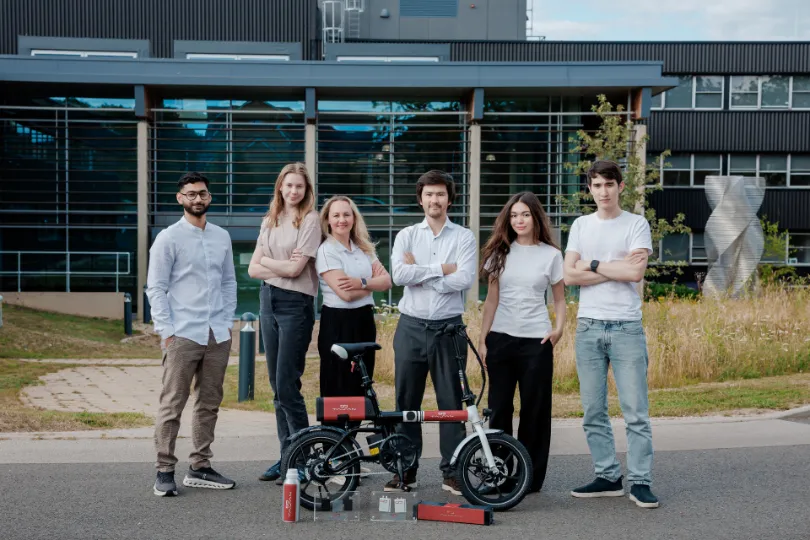
The next generation of sodium batteries: why we invested in TaiSan
Adeline Arts and Science participated in TaiSan's £4.65M seed round, co-led by Eos Advisory and the Midlands Engine Investment Fund II through Mercia Ventures.

Why rest is still today's most radical productivity hack
If being bored is the key to greatness, are you out of practice? Adeline's Liz Bennett on the power of deliberate rest in an era of AI hustle culture.
.svg)