Pi Labs Growth Programme
Not financial or fundraising advice. See full disclaimer.
Tickets
Rounds
Sectors
Target Geography
Last Edited:
October 2, 2025
To suggest a correction to the database, or request to be added or removed from it, contact us at info@adeline.co.uk.
In London’s tech ecosystem, Pi Labs has carved out a sharp-edged niche: a venture capital firm and accelerator with an unwavering focus on the “built world.” Since launching Europe’s first PropTech accelerator in 2015, Pi Labs has backed more than 80 startups across 15 countries, betting on innovations that promise to digitise, decarbonise, or otherwise drag the real estate and construction industries into the 21st century.
Founded by Faisal Butt, a former property investor turned tech evangelist, Pi Labs has built a reputation for spotting early opportunities in one of the world’s slowest-moving sectors. Their 12-week Growth Programme is a rare hybrid: part accelerator, part investment engine, and part strategic partner. Startups selected for the programme receive around £350,000 via a SAFE note, along with tailored mentorship, industry introductions, and access to a well-developed network of real estate heavyweights. Unlike many accelerators, they run a single cohort annually, making each intake highly selective—1,000 applicants vied for just five spots in 2024.
Their thesis is sharply defined. Pi Labs is not for generalist founders or broad SaaS plays. They want PropTech—software, hardware, or services that tackle entrenched inefficiencies in the way buildings are designed, built, managed, financed or used. Increasingly, that includes climate tech: startups targeting carbon emissions in construction or improving energy efficiency in buildings are squarely in their sights. But whatever the angle, founders need to show more than a big idea. Pi Labs is looking for traction, clear market logic, and evidence that the team can execute in an industry known for long sales cycles and conservative buyers.
What founders get in return is more than capital. The Pi Labs team, along with a deep bench of mentors—often senior executives from major property firms—takes a hands-on approach. This is a firm that helps close pilot deals, rehearse investor pitches, and navigate the nuances of selling to landlords and construction giants. Alumni often point to these connections as game-changing. Bright Spaces’ CEO credited Pi Labs for landing their first UK clients; Office R&D’s founder described the programme: “Pi Labs gave us everything that a starting business might need.”
Pi Labs is not just London-focused. Though headquartered in the UK, they invest globally, with a preference for startups looking to expand into Europe. Their follow-on strategy is active, with capital available for later-stage rounds—underscoring their ambition to back category leaders from seed to scale.
For early-stage founders in the built environment, Pi Labs offers something rare: a funding partner that understands the sector’s idiosyncrasies, can accelerate market access, and stays in the game beyond Demo Day. Just don’t expect it to be easy—acceptance is tough, the bar is high, and the questions are pointed. But for those building at the intersection of tech and the physical world, Pi Labs might just be the launchpad they need.

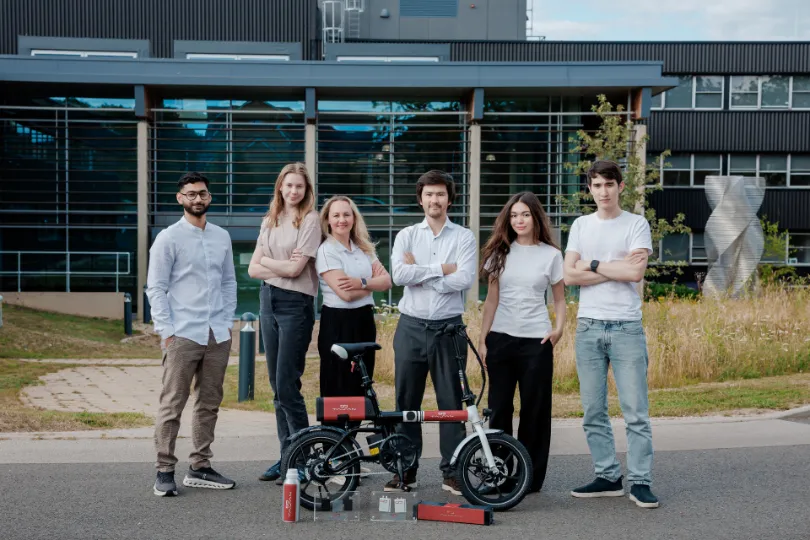
The next generation of sodium batteries: why we invested in TaiSan
Adeline Arts and Science participated in TaiSan's £4.65M seed round, co-led by Eos Advisory and the Midlands Engine Investment Fund II through Mercia Ventures.

Why rest is still today's most radical productivity hack
If being bored is the key to greatness, are you out of practice? Adeline's Liz Bennett on the power of deliberate rest in an era of AI hustle culture.
.svg)